



Do you want to Empower Farmer Like We Do? Get Involved!
All About Agriculture is your trusted agriculture platform, dedicated to empowering farmers across India. Our comprehensive portal delivers end-to-end solutions for the farming community- from seed selection and soil preparation to crop harvesting and market access. We enable farmers to access expert advisory on precision farming, advanced technologies, and sustainable agriculture practices.
Our one-stop solution also connects growers to essential financial services, including agriculture loans and crop insurance, helping to secure farm incomes. Through educational content, success stories, and real-time market insights, we promote awareness and adoption of modern agricultural methods. Join our agriculture community to stay updated with the latest trends, government schemes, and innovative farm machinery- so you can achieve better yields, higher profits, and a brighter future in Indian agriculture.
Irrigation scheduling is the process of planning and managing irrigation water applications to optimize crop growth, reduce water waste, and minimize environmental impact.
Crop monitoring is the process of observing and analyzing crop health, growth, and development to optimize crop yields, reduce losses, and promote sustainable agriculture.
Advanced technologies in precision farming—like precision irrigation, VRT, soil and crop sensors, drones, AI, and automation—enable data-driven, site-specific decisions. These innovations help farmers boost yields, conserve resources, and enhance sustainability.
Precision agriculture combines technologies like GPS, GIS, remote sensing, and data analytics to monitor and manage crops with accuracy. Techniques such as precision irrigation, variable rate application, and crop monitoring help enhance productivity, reduce input waste, and support sustainable farming.
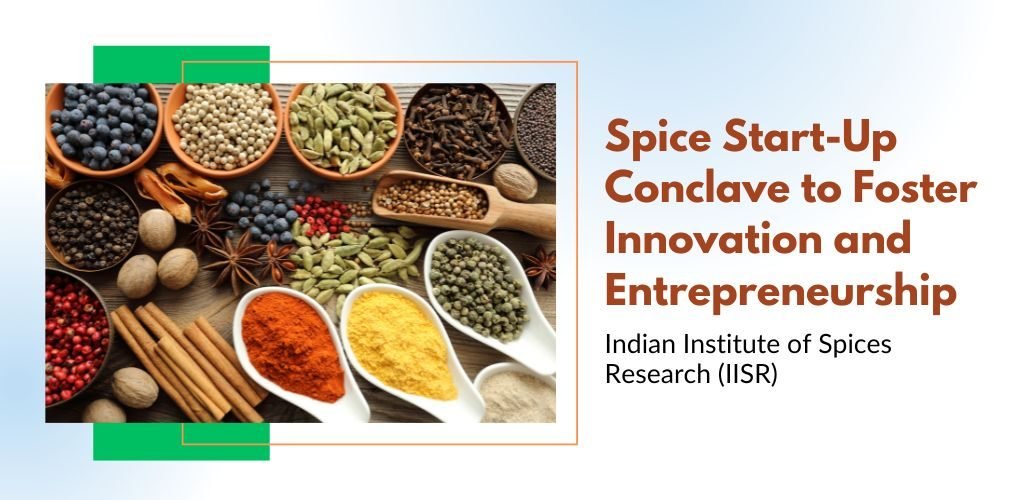
The Indian Institute of Spices Research (IISR) in Kozhikode is set to host a three-day startup conclave titled “Rise Up” from February 19 to 21, aimed at inspiring innovative ideas and promoting entrepreneurship in the spice industry. Organized in collaboration with the Kerala Startup Mission, the conclave will feature an Ideathon, where students, entrepreneurs, and startups are invited to submit their creative proposals online by February 15.
The aim of the event is to address contemporary challenges in spice cultivation and processing while enhancing value addition, with sessions focused on themes such as the future of spice-based entrepreneurship and technological advancements within the industry. The Ideathon will cover six critical topics:
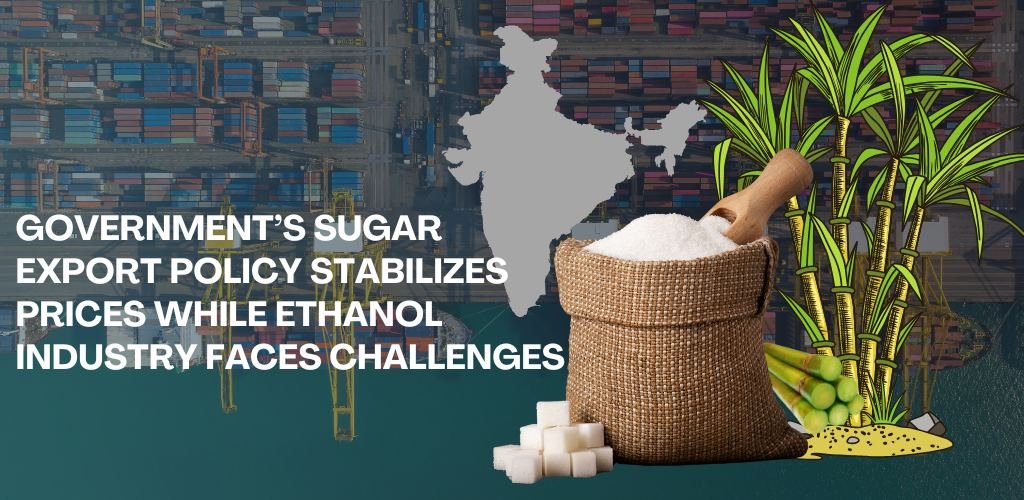
In recent developments concerning the Indian sugar market, the government’s sugar export policy has played a pivotal role in maintaining stable prices, according to industry experts. This strategy comes at a time when the ethanol sector continues to grapple with various challenges, particularly due to stagnant pricing structures.
Avantika Saraogi, Executive Director of Balrampur Chini Mills, one of India’s largest integrated sugar manufacturing companies, addressed these issues in a recent interview. She noted that the decision not to raise ethanol prices this year—a policy that many in the sector had anticipated—poses significant challenges for producers. Even as sugar prices remain strong, the ethanol industry’s economic viability is being compromised.
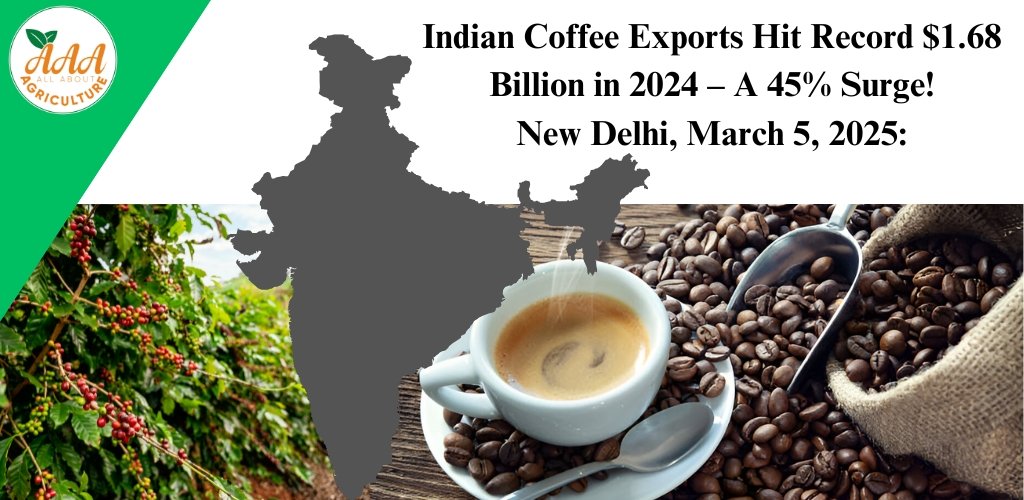
In a historic achievement, India’s coffee exports crossed the $1 billion mark for the first time, reaching an impressive $1.68 billion in 2024. According to the Centre for Monitoring Indian Economy (CMIE), this marks a 45% year-on-year growth, driven by soaring global demand and rising Robusta coffee prices.
Loan Amount: Depending on the farmer’s landholding and cultivation needs, loans up to Rs. 5 lakh can be sanctioned.
Interest Rate: The government provides interest subvention (lower interest rates), reducing the financial burden on farmers.
Using the KCC for purchasing farm machinery and equipment allows farmers to make high-end machines more affordable.
Frequently Asked Questions
The Government of India has fixed the Minimum Support Price (MSP) for wheat at ₹2,275 per quintal for the 2024-25 Rabi marketing season. MSP ensures that farmers get a guaranteed price for their crops, protecting them from market fluctuations and losses.
To avail benefits under PM-KISAN, where eligible farmers receive ₹6,000 annually in three installments, you need to register online at pmkisan.gov.in. Click on “New Farmer Registration,” and provide your Aadhaar number, bank details, and landholding documents. You can also register at your nearest CSC (Common Service Centre).
A polyhouse is a type of greenhouse made from transparent plastic material where temperature, humidity, and sunlight can be controlled. It is useful for cultivating high-value crops like capsicum, tomato, cucumber, and flowers. Farmers can benefit from higher yields, reduced pest attacks, and the ability to grow crops throughout the year, including off-season.
Yes, the government provides 50% to 75% subsidy for setting up polyhouses under schemes like the Mission for Integrated Development of Horticulture (MIDH). The actual subsidy depends on your state and farmer category (SC/ST, women, small/marginal farmers may get higher support). Applications are typically submitted through the state horticulture department.
You can get your soil tested at any government-approved Soil Testing Laboratory or through mobile testing vans. The Soil Health Card (SHC) scheme provides free testing and gives farmers a report on nutrient status and fertilizer recommendations. Apply through soilhealth.dac.gov.in or your local agriculture office.
Crop selection depends on various factors like soil quality, rainfall, temperature, and market demand. You can get region-specific crop advice from your nearest Krishi Vigyan Kendra (KVK), local agriculture officer, or by using our online “Crop Advisory Tool” available on the website. This helps maximize yield and profit.